




The Principles Behind Scandinavian Furniture
Danish Design 101
"Danish design" gets used as a marketing term a lot more often than it gets properly explained. It's become shorthand for anything with clean lines and light timber — which isn't wrong, exactly, but it misses what actually makes the philosophy behind it useful, rather than just aesthetically pleasing.
Tom and Rose, who've run our Carlton North showroom together since 2020, put it simply when we asked them what drew them to the brand in the first place: it's not really about how the furniture looks. It's about what the furniture is designed to do — and the look is what happens when that's done properly.
Here's what that actually means, broken down into the three principles that show up in every piece we carry.
1. Function First — But Never at the Cost of Form
The most misunderstood part of Danish design is the assumption that function and beauty are a trade-off — that you sacrifice one to get the other. Danish design rejects that entirely. The starting brief for most pieces isn't "how do we make this look good," it's "how do we solve this problem well," with the visual design worked out around that solution rather than layered on top of it afterward.
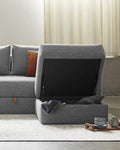
You can see this directly in how a sofa bed mechanism is designed. Take our Dublexo range — the fold-out mechanism isn't a hinge bolted underneath a normal-looking sofa. It's engineered into the frame from the very first sketch, which is why it doesn't have the bulky, "obviously a sofa bed" look that cheaper alternatives can't avoid. The mechanism dictates the silhouette, not the other way around.
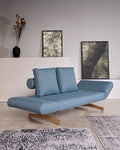
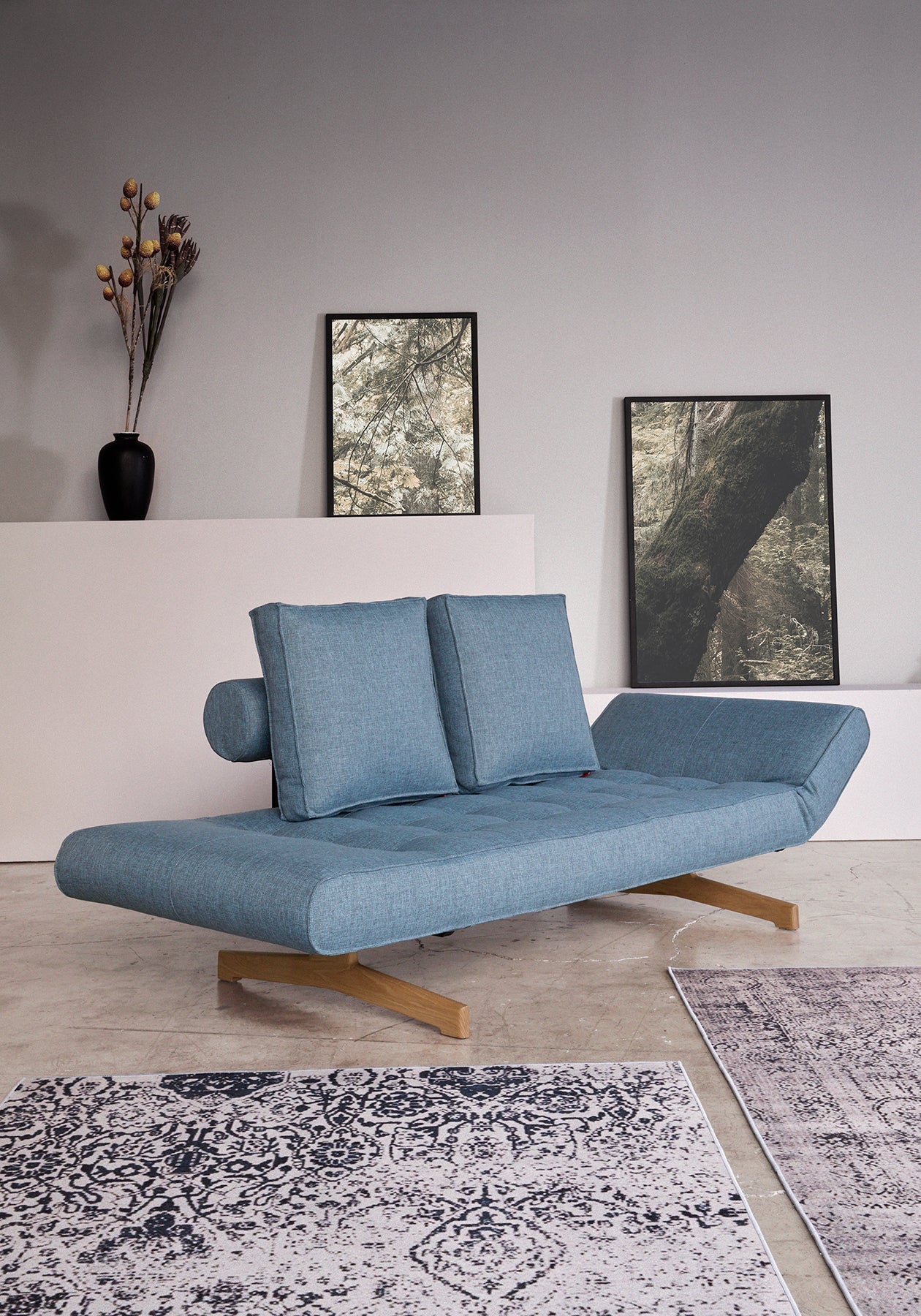
Our Circlus daybed with L-shaped arms is an even clearer example: the same cushions that act as armrests in sofa mode become corner support in lounge mode. One design decision, two functions, zero compromise on how it looks in either configuration.

2. Hygge: Comfort as a Design Requirement, Not an Afterthought
Hygge (pronounced roughly "hoo-gah") doesn't translate cleanly into English, but the closest approximation is something like "a deliberate sense of cosiness and contentment." It's not about minimalism for its own sake — it's about creating spaces that feel genuinely good to be in, not just good to look at in a photo.
In furniture terms, this shows up as an insistence on comfort that's engineered, not assumed. Our Mikunjo range is a good example: the quilted upholstery isn't just a texture choice, it's designed to celebrate the natural folds that form as the backrests adjust between upright and reclined positions — so the piece looks more inviting, not less, the more it's actually used. That's a very hygge idea: a home that shows signs of being lived in is more successful than one that looks untouched.
Rose has talked about this exact thing with customers in the showroom — that a lot of people come in worried a big, comfortable piece will look "too casual," when in Danish design terms, that lived-in warmth is the entire point.

3. Materials Chosen for Decades, Not Seasons
Danish manufacturing has historically operated on a much longer time horizon than a lot of the furniture market. The expectation isn't that a sofa gets replaced in three years — it's that it gets kept for ten or twenty, which changes every material decision that goes into it.
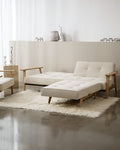
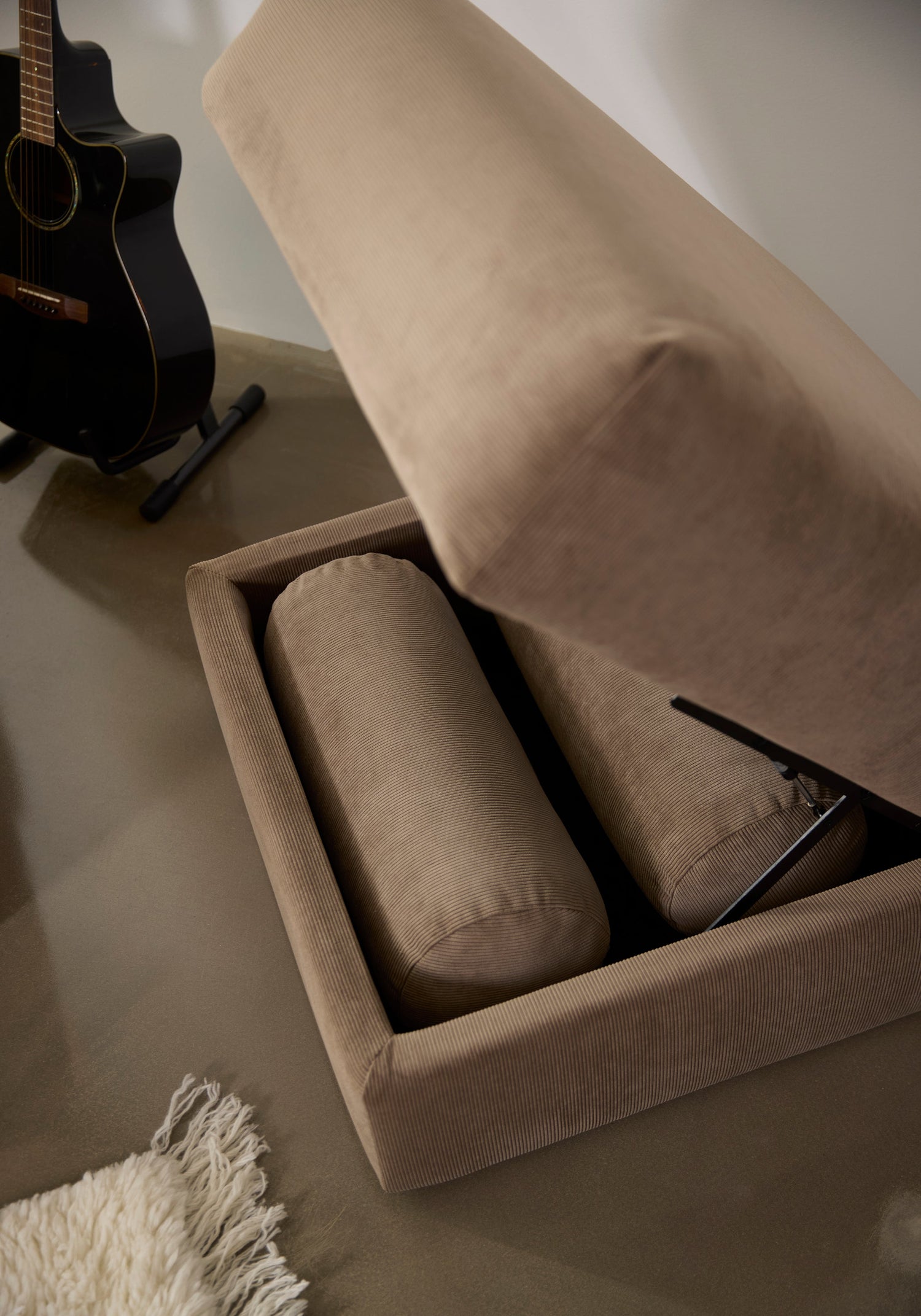
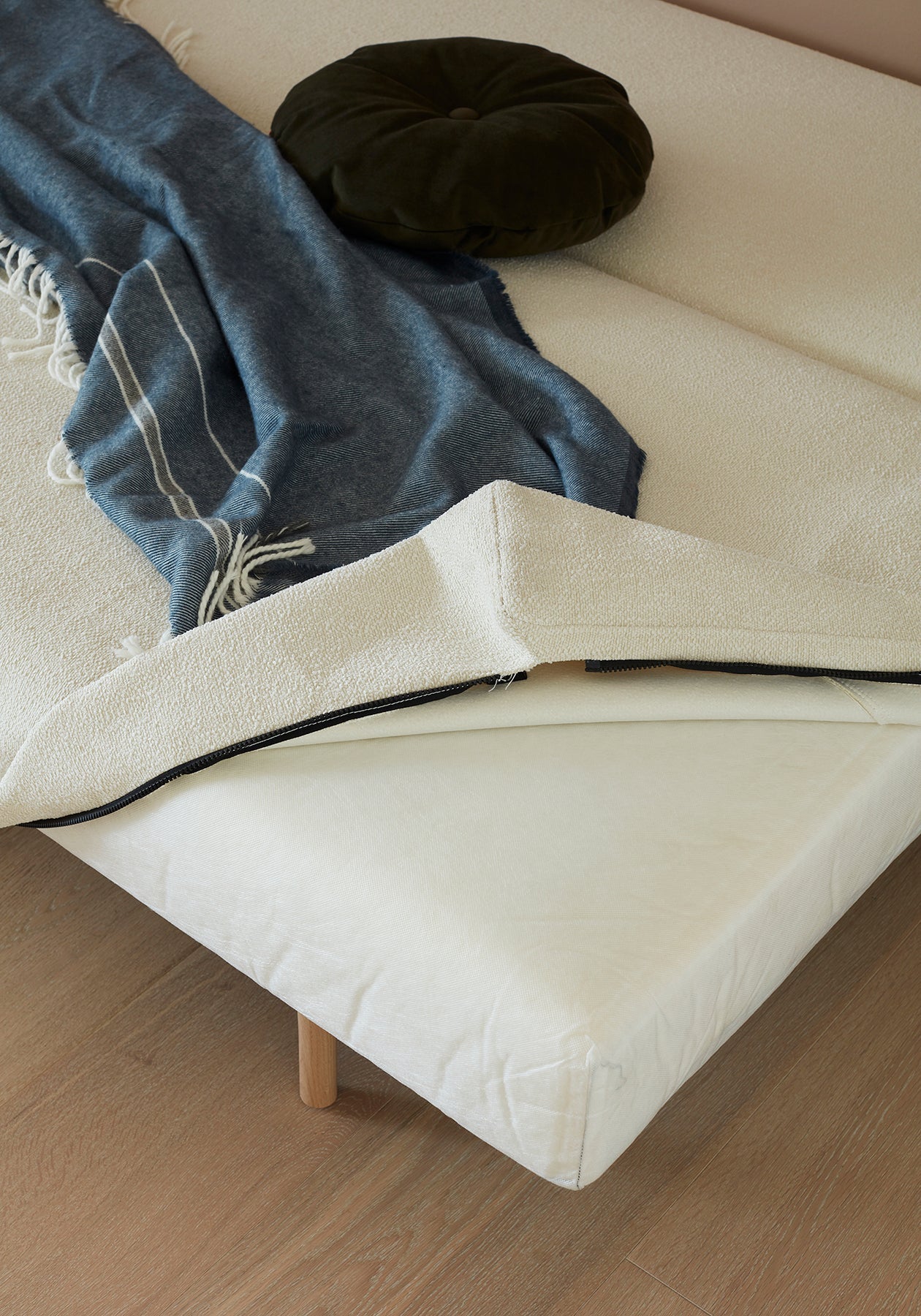
This is where a showroom visit genuinely matters more than a product photo. Fabric weight, foam density, and frame material are things you can read on a spec sheet, but they're things you feel the difference of in person. Kelly, who many of our customers have met when visiting the showroom, spends a lot of her time walking people through exactly this — why a Halifax weave behaves differently to a Bouclé over years of use, or why a pocket spring base (like the one in our Ran Dual, holds its shape longer than a basic foam fold-out.
Why This Matters More in Melbourne Than You'd Think
Danish design principles weren't developed with Melbourne apartments in mind, but they translate unusually well to how a lot of people live here:
- Function-first design suits small footprints. A sofa bed that's genuinely well-engineered, not just "technically a sofa bed," matters more in a one-bedroom apartment than a house with a spare room.
- Hygge suits Melbourne's climate. Cold, damp winters and a culture that leans heavily into indoor entertaining make "designed for comfort" a practical requirement, not just a nice idea.
- Long-life materials suit a market pushing back against fast furniture. More of our customers are actively asking about longevity and sustainability than they were even a few years ago — which is exactly what this design philosophy was built around, decades before it became a selling point.
See the Difference, Don't Just Read About It
Everything above is easier to explain than it is to actually notice from a photo. The quilting on Mikunjo, the mechanism weight on a Dublexo, the way a Circlus cushion moves from armrest to corner support — these are things worth sitting with in person before you commit.
Our showroom at 262–268 Rathdowne St, Carlton North holds the largest Innovation™ collection in Australia, and it's set up specifically so you can test all three of these principles yourself — open a mechanism, sit on the actual foam, feel the actual fabric — rather than trust a spec sheet.
Want to feel the difference for yourself? If you're in-store, ask Kelly ,Tom or Rose, to walk you through what's actually underneath the fabric.